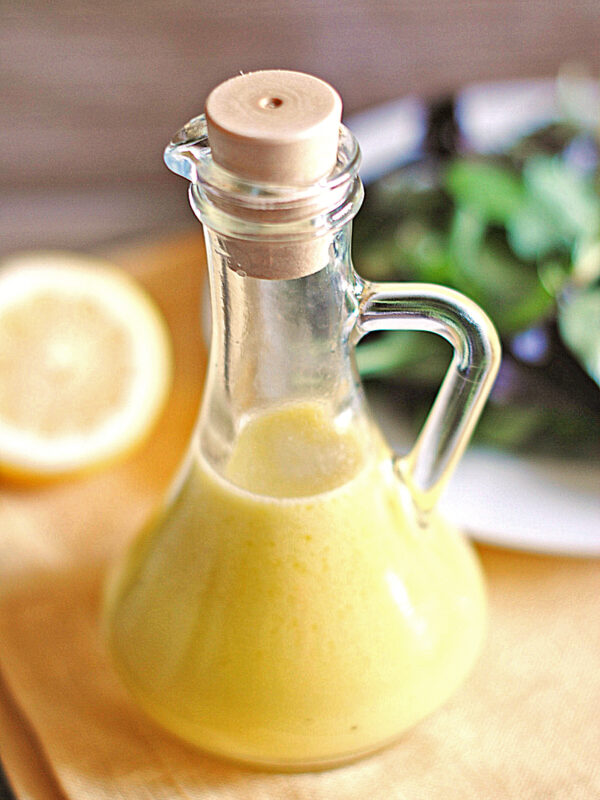
This Poppy Seed Dressing recipe is light, sweet and perfectly tangy made with simple ingredients in just 5 minutes! The perfect addition to fresh salads, fruit, or grilled chicken and tastes so much better than store-bought.
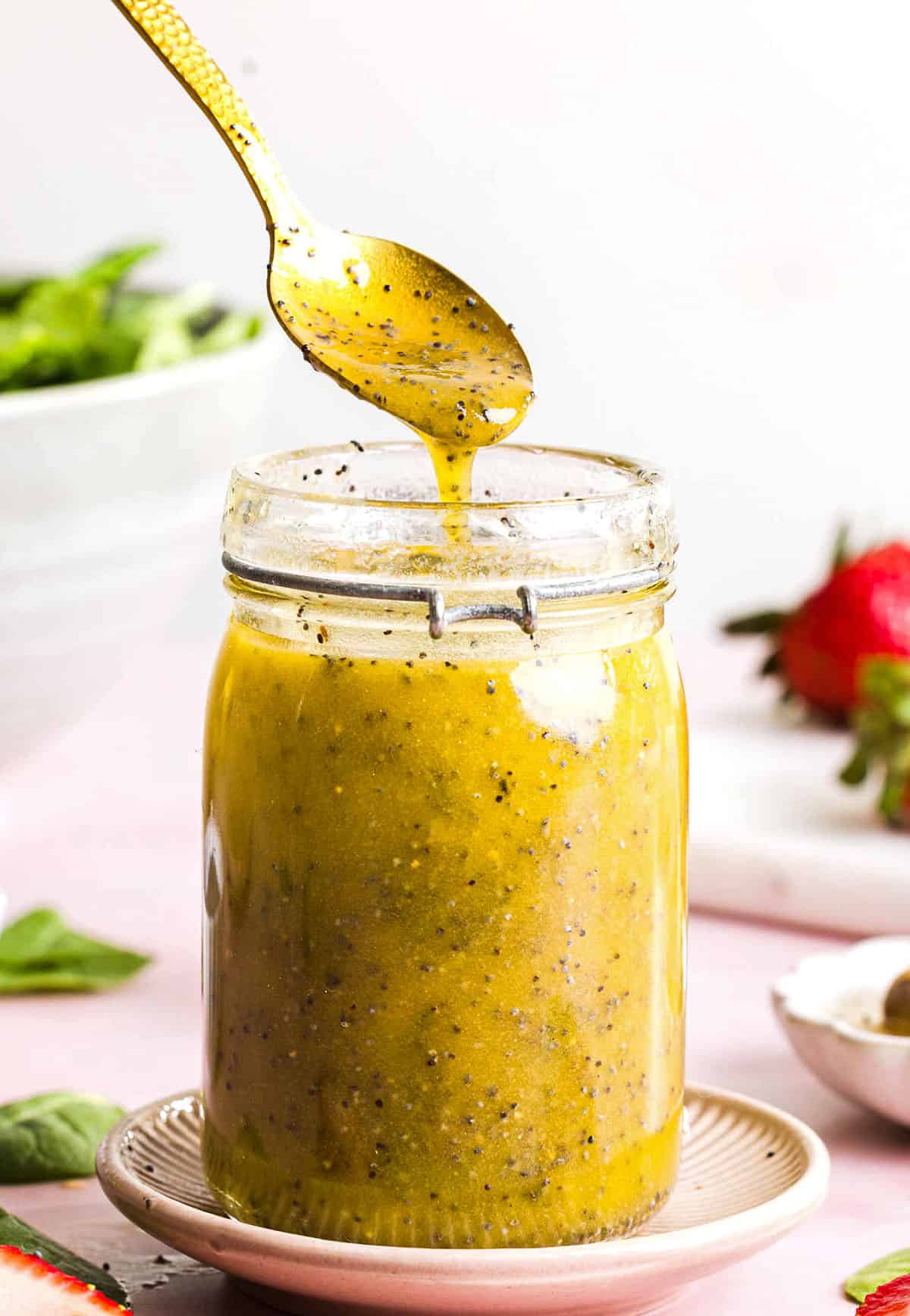
If you’ve ever had a fresh strawberry salad topped with a sweet poppy seed dressing, then you know how completely irresistible this flavor combo is! This homemade poppy seed dressing is light, slightly tangy, perfectly sweet, and comes together in just minutes with simple pantry ingredients. No need for store-bought dressings, this tastes much fresher and is a healthier choice. Whether tossing with a spring salad, drizzling over fresh fruit or marinating some grilled chicken, this is one recipe you’ll find yourself making on repeat!
Why You’ll Love This
- Quick and easy – this is the best poppy seed dressing easily made in just 5 minutes with no fancy equipment that the whole family will love.
- Better than store-bought – fresher flavor with simple, real ingredients that tastes so much better than bottled dressings from the store.
- Versatile – this easy dressing works with salads, fruit, drizzled on wraps, grain bowls, and tastes great used as a marinade for chicken, fish or shrimp.
- Make-ahead friendly – this dressing stores well in the fridge making it great for meal prep.
Ingredients You’ll Need
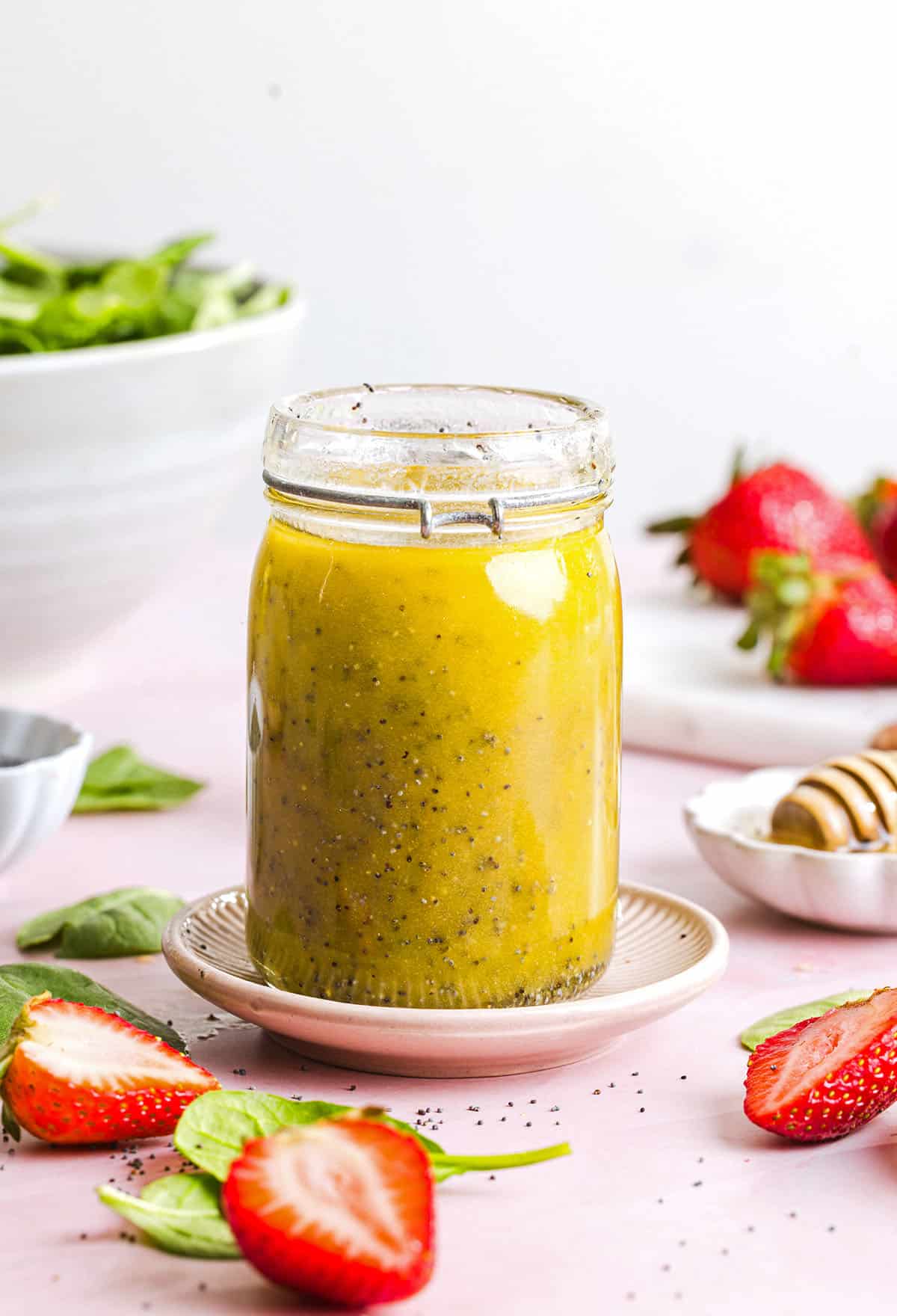
- olive oil – I like to use a good olive oil that doesn’t have to be expensive, just make sure it’s cold-pressed and organic for the most flavor. Avocado oil makes a great option as well.
- red wine vinegar – this brings a bold, tangy bite that balances our the sweetness in this dressing. You could also substitute with white wine vinegar, champagne vinegar or extra apple cider vinegar.
- apple cider vinegar – adds a slightly milder, subtly sweet acidity that rounds out all these flavors.
- honey – naturally sweetens the dressing without using any refined sugars. You could also use maple syrup or other natural sweetener.
- Dijon mustard – this helps emulsify the dressing so it stays well combined while adding depth of flavor.
- poppy seeds – these add a delicate crunch and that signature look to the dressing.
- salt + black pepper – needed to add flavor to this dressing.
How to Make Poppy Seed Dressing
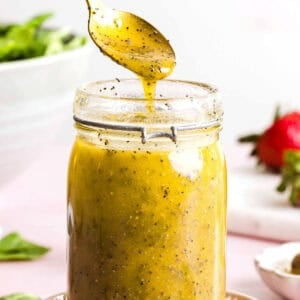
- Combine ingredients. In a small bowl or mason jar, add the olive oil, red wine vinegar, apple cider vinegar, honey, Dijon mustard, poppy seeds, sea salt and pepper. Whisk or shake until the dressing is well combined and slightly thickened.
- Taste and adjust. Feel free to add more honey for sweetness or additional salt and pepper, as needed, for taste.
- Let rest or store for later. Let the dressing sit for about 10 to 15 minutes so the flavors can meld together. You can also store the dressing in a sealed, airtight container or jar with a lid in the refrigerator until ready to use.
Variations
- Make it creamy – for a creamy poppy seed dressing, use a blender or whisk in 2 tablespoons of Greek yogurt, sour cream or a little mayo.
- Swap the sweetener – use maple syrup in place of honey for a deeper, slightly earthy sweetness or a little agave nectar for a milder flavor.
- Bright citrus twist – replace part of the vinegar with fresh lemon juice for a bright, zesty finish. You could also try orange juice, orange zest or lime juice for a different taste.
- Make it savory – stir in one minced garlic clove or a finely chopped shallot for a slightly sweet, mild onion flavor.
Ways to Use Poppy Seed Dressing
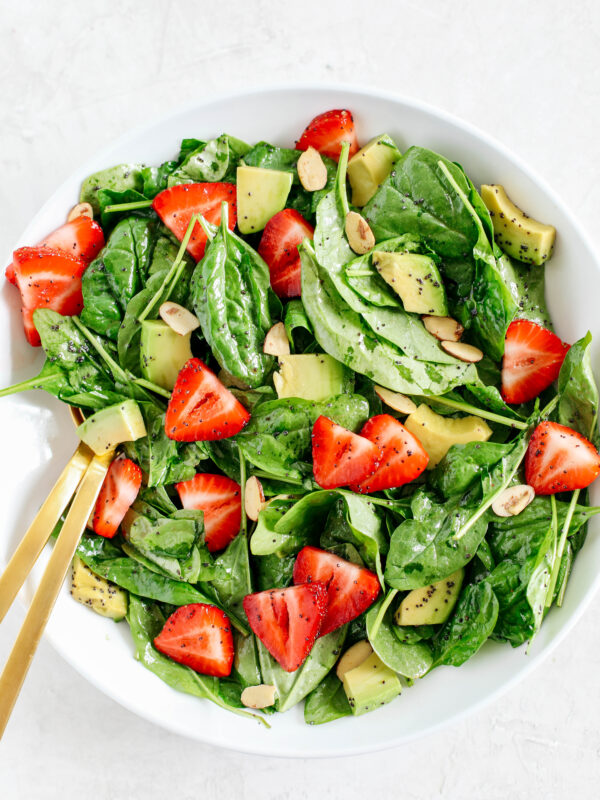
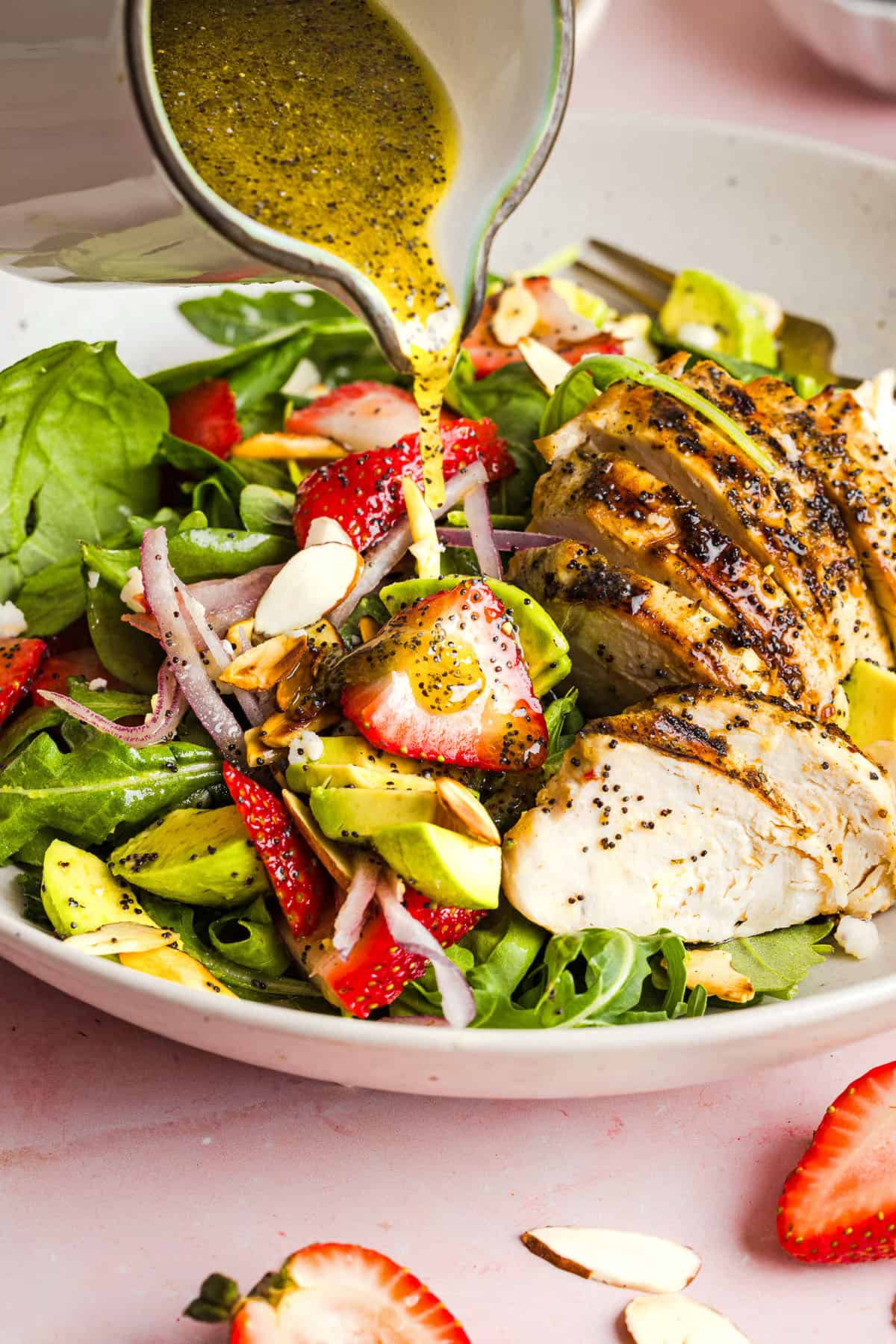
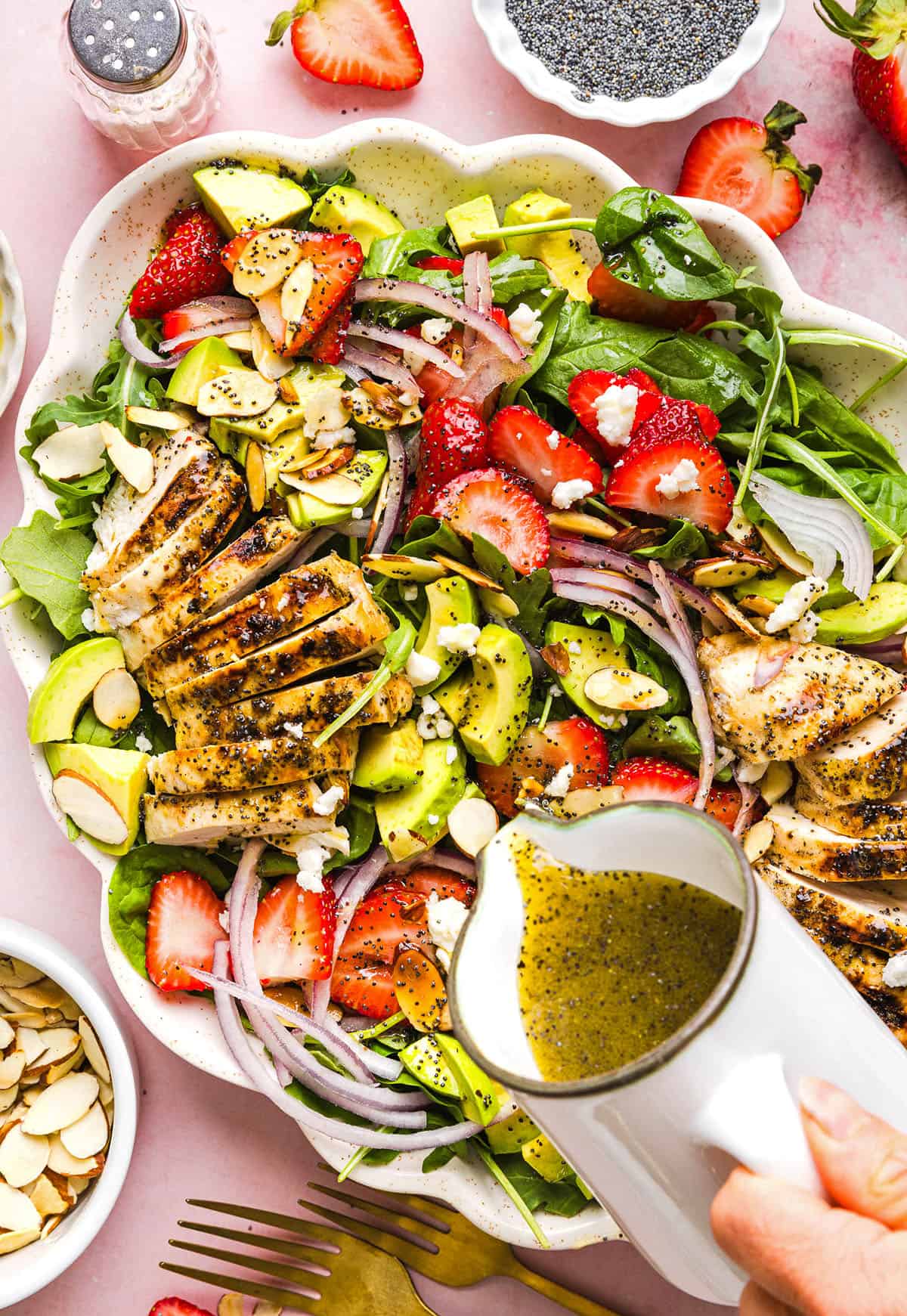
- Spring salads – toss this dressing with spinach, arugula, or a spring mix along with some nuts, cheese and fresh fruit to instantly elevate everyday greens. Pair with this strawberry chicken salad, strawberry spinach salad or this raspberry walnut salad.
- Fresh fruit salads – this dressing doubles as a light glaze for fruit! Drizzle a small amount over a mix of strawberries, grapes, blueberries, fresh berries and apple slices to enhance the natural sweetness with a hint of tang.
- Grain bowls – drizzle over quinoa, farro, or brown rice bowls layered with roasted vegetables, leafy greens, and protein like chicken, salmon or chickpeas. The dressing adds a pop of flavor that ties everything together.
- Pasta salads – skip heavy, mayo-based dressings and toss with cooked and cooled pasta, fresh veggies, and a protein like grilled chicken or chickpeas for a lighter pasta salad option.
- Wraps and sandwiches – spread a little inside wraps or sandwiches for added flavor. It pairs especially well with turkey, chicken or veggie wraps and adds a little sweetness that balances the savory fillings.
- Marinade for proteins – use this dressing as a quick marinade or chicken or shrimp. The vinegar helps tenderize while the honey adds a subtle caramelized flavor when cooked, perfect for grilling or baking.
Keep a jar of this dressing in your fridge and use it throughout the week to instantly upgrade salads, bowls, and quick meals! One of those small things that makes healthy eating feel effortless and delicious!
Pin this now to find it later
Pin ItFollow on Instagram
Frequently Asked Questions
Homemade poppy seed dressing has the perfect balance of sweet and tangy flavors. The honey adds natural sweetness, while the red wine vinegar and apple cider vinegar provide a bright, slightly tangy finish. The poppy seeds add a subtle nutty flavor and a little crunch.
Absolutely! This dressing is perfect for meal prep. Make it up to 1 week in advance and store it in an airtight jar or container in the refrigerator. Give it a good shake or whisk before serving, as the oil may naturally separate.
That’s completely normal! Since this dressing contains olive oil and vinegar without preservatives or emulsifiers, the ingredients naturally separate over time. Simply shake or whisk it together before serving.
Yes! Maple syrup or agave nectar can be substituted for the honey with great results. Keep in mind that each sweetener will slightly change the flavor.
Yes! This dressing is naturally gluten-free. Just be sure to check the labels on your Dijon mustard and other packaged ingredients if you have a gluten sensitivity or allergy.
Yes! The combination of oil, vinegar, Dijon mustard, and honey works wonderfully as a marinade for chicken or pork. Marinate for 30 minutes to 4 hours before cooking for the best flavor.
For a creamy version of this poppyseed salad dressing, whisk in 1 to 2 tablespoons of plain Greek yogurt or a spoonful of mayonnaise. This creates a richer dressing while still keeping that signature sweet and tangy flavor. I love creamy dressings!
Homemade dressings are fresher, made with simple pantry ingredients, and contain no unnecessary preservatives found in store-bought salad dressings. Plus, you can easily adjust the sweetness, tanginess, or seasoning to suit your taste.
Prepping and Storage
This poppy seed dressing will last in a sealed, airtight jar or container in the refrigerator for up to 1 week. Shake or whisk well before each use as separation is natural. If the olive oil solidifies slightly in the fridge, let it sit at room temperature for a few minutes, then shake.
More Dressings You’ll Love
- Lemon Dijon Herb Dressing
- Easy Italian Dressing
- Creamy Avocado Ranch Dressing
- Lemon Tarragon Salad Dressing
- Ginger Sesame Vinaigrette
- Sweet Basil Vinaigrette
Hope you all enjoy this Creamy Poppyseed Dressing! If you love this recipe as much as we do, please leave a ⭐️⭐️⭐️⭐️⭐️ star rating below. Don’t forget to tag me on Instagram using the hashtag #eatyourselfskinny!
Poppy Seed Dressing
Ingredients
- 1/3 cup olive oil
- 2 Tbsp red wine vinegar
- 1 Tbsp apple cider vinegar
- 2 Tbsp honey
- 1 Tbsp poppy seeds
- 1 tsp Dijon mustard
- 1/2 tsp salt
- Pinch of black pepper
Instructions
- In a medium bowl or jar, whisk together all ingredients until smooth and creamy. Serve immediately or store in an airtight container in the fridge until ready to serve.
Nutrition
Nutrition information is automatically calculated, so should only be used as an approximation.