
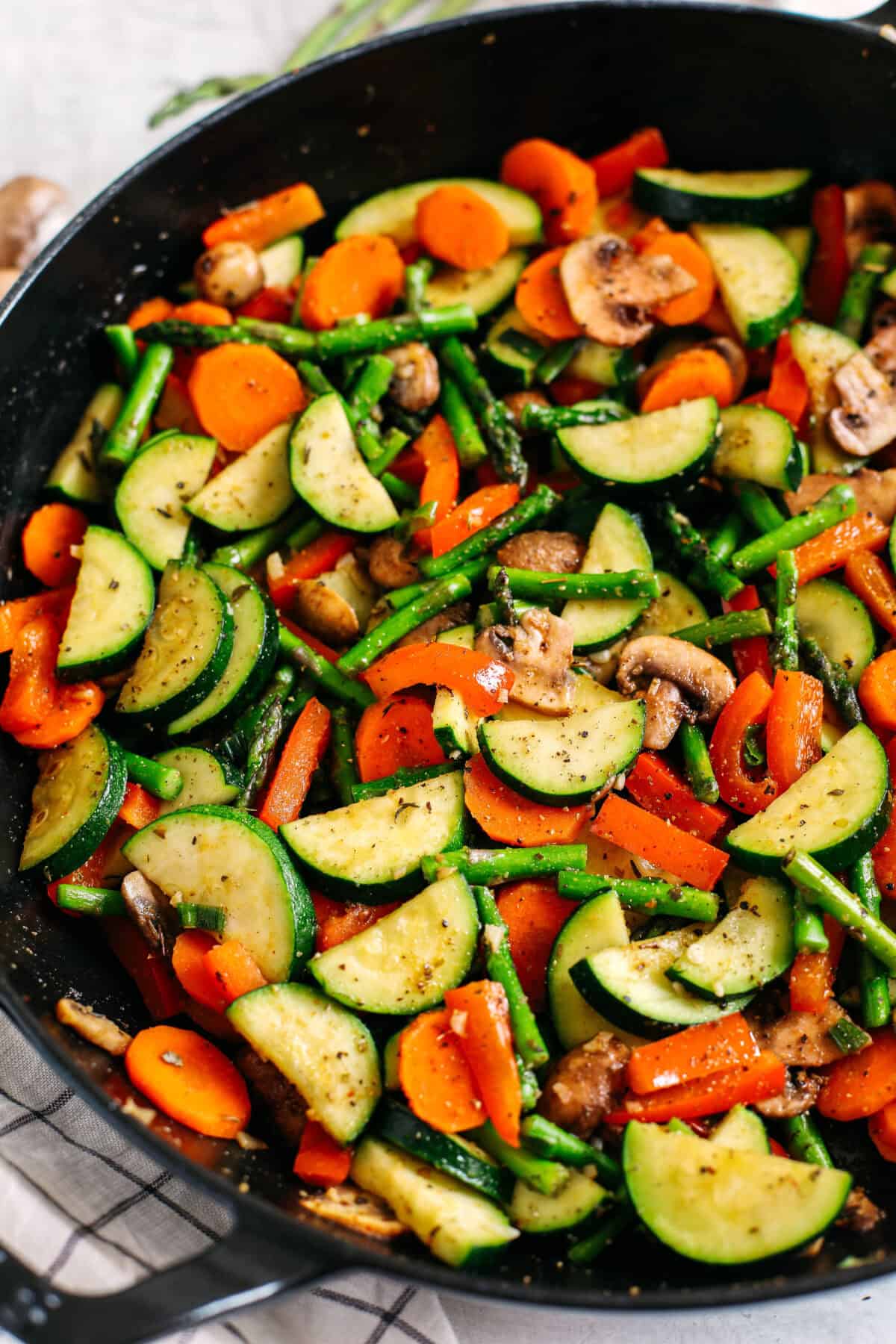
These flavorful Simple Sautéed Vegetables are crisp, tender and seasoned to perfection with garlic, herbs and spices. Ready in just 25 minutes and made all in one skillet, this easy vegetable side dish is a delicious way to add more veggies to any meal!
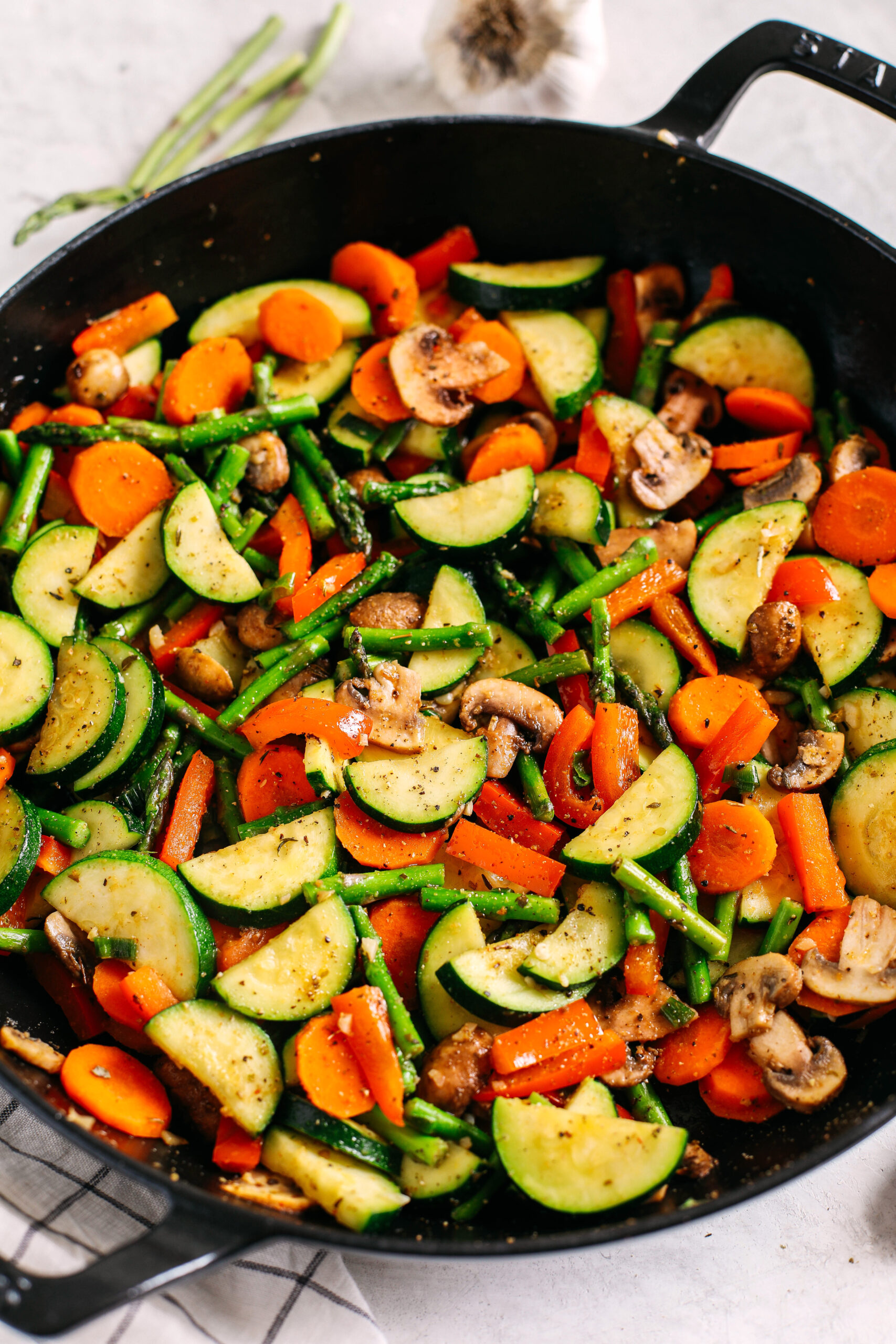
Table of Contents
- Why You’ll Love This
- Ingredients You’ll Need
- Other Vegetable You Can Sauté
- How to Sauté Vegetables
- Which Vegetables Should You Sauté First?
- How Long Does it Take to Sauté Vegetables?
- How to Keep Sautéed Vegetables from Getting Soggy
- Can I Sauté Frozen Vegetables?
- Tips, Tricks and Substitutions
- What to Serve with Sautéed Vegetables
- Frequently Asked Questions
- More Healthy Vegetable Side Dishes
- Simple Sautéed Vegetables Recipe
These flavorful Simple Sautéed Vegetables are crisp, tender and seasoned to perfection with garlic, herbs and spices. Ready in about 25 minutes and made all in one skillet, this easy vegetable side dish is a delicious way to add more veggies to any meal!
Sautéing is one of my favorite ways to cook vegetables because it’s quick, easy and gives them those delicious golden edges while keeping them crisp and tender. The key is using a hot skillet, adding the vegetables in the right order and giving them enough room to brown rather than steam.
This combination of zucchini, asparagus, bell pepper, carrots and mushrooms is my go-to, but you can easily use whatever vegetables you have on hand. It’s the perfect clean-out-the-fridge side dish for busy weeknights!
Why You’ll Love This
- Quick and easy – everything cooks in one skillet and is ready in about 25 minutes.
- Healthy side dish – an easy and delicious way to add a variety of colorful vegetables to your meal.
- Easy to customize – use your favorite vegetables or whatever you already have in the fridge.
- So much flavor – fresh garlic, Italian seasoning and spices give these simple veggies tons of flavor.
- One-pan recipe – less cleanup is always a win!
- Great for meal prep – make a batch at the beginning of the week and add them to lunches and dinners.
Ingredients You’ll Need
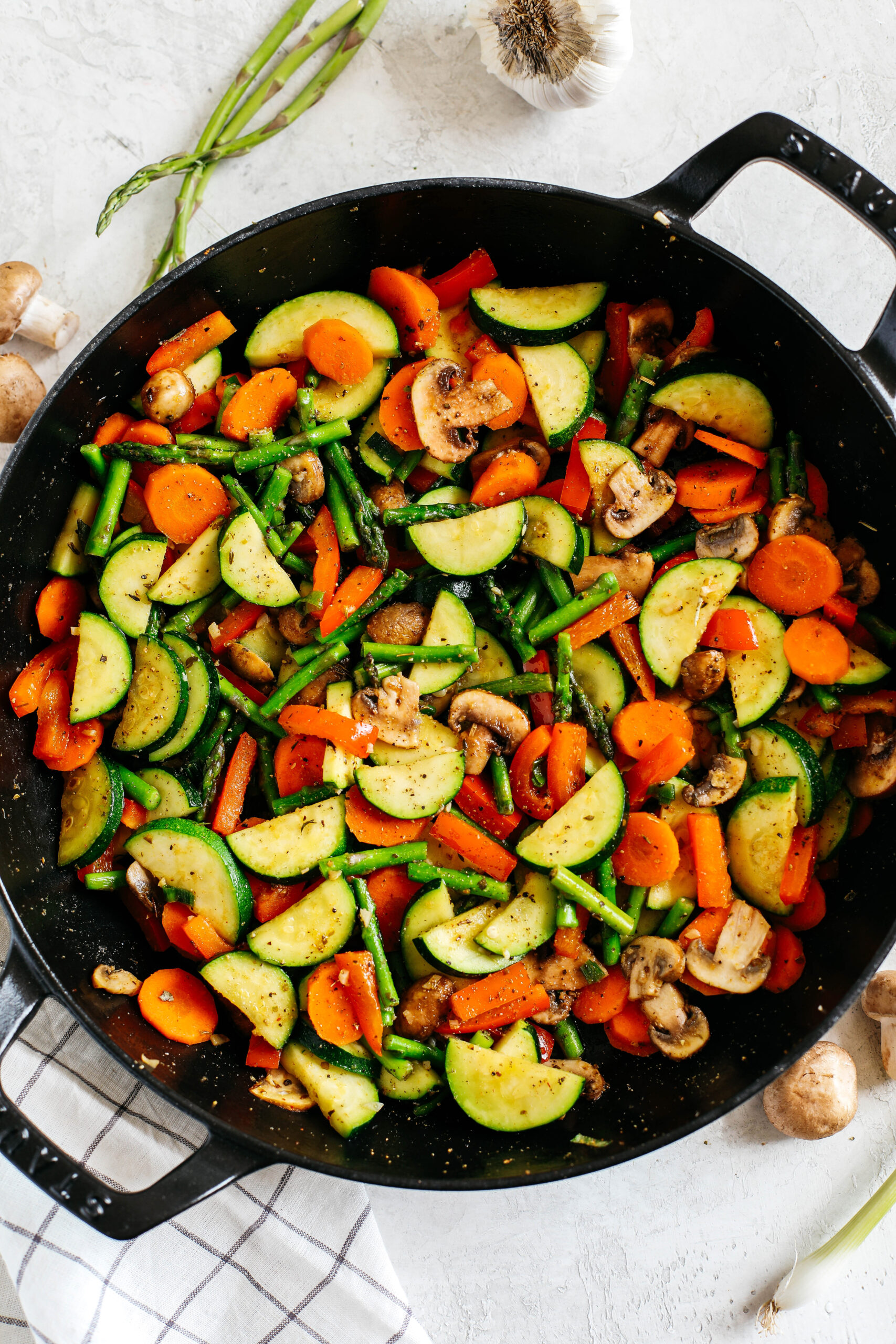
- zucchini – cooks quickly and gets perfectly tender in the skillet. Yellow squash would also work.
- asparagus – adds great texture and tastes delicious with the garlic and seasonings.
- bell pepper – I use a red bell pepper for its slightly sweet flavor and beautiful color, but any color will work.
- carrots – add a little natural sweetness, crunch and color. Slice them fairly thin so they cook evenly.
- mushrooms – I love baby bella mushrooms, but white button mushrooms work just as well.
- green onions – add extra flavor and a pop of color. You could also use diced white, yellow or red onion.
- olive oil – olive oil helps the vegetables brown and caramelize. Avocado oil or butter can also be used.
- garlic – fresh minced garlic adds the best flavor. In a pinch, substitute about 1 1/2 teaspoons garlic powder.
- seasonings – a simple combination of Italian seasoning, onion powder, paprika, kosher salt, black pepper and a pinch of red pepper flakes.
Other Vegetable You Can Sauté
One of the best things about sautéed vegetables is how easy they are to customize! Try swapping in:
- Broccoli
- Cauliflower
- Green beans
- Snow peas or sugar snap peas
- Brussels sprouts
- Yellow squash
- Grape or cherry tomatoes
- Onions
- Sweet potatoes
- Kale or spinach
Just remember that different vegetables have different cooking times. Firmer vegetables should generally go into the skillet first, while softer or more delicate vegetables should be added toward the end.
How to Sauté Vegetables
Learning how to sauté vegetables is really simple, but a few little tricks make a big difference. You want the skillet hot enough to brown the vegetables without burning them, and it’s important not to overcrowd the pan or stir constantly. Here’s how to get perfectly crisp-tender vegetables every time:
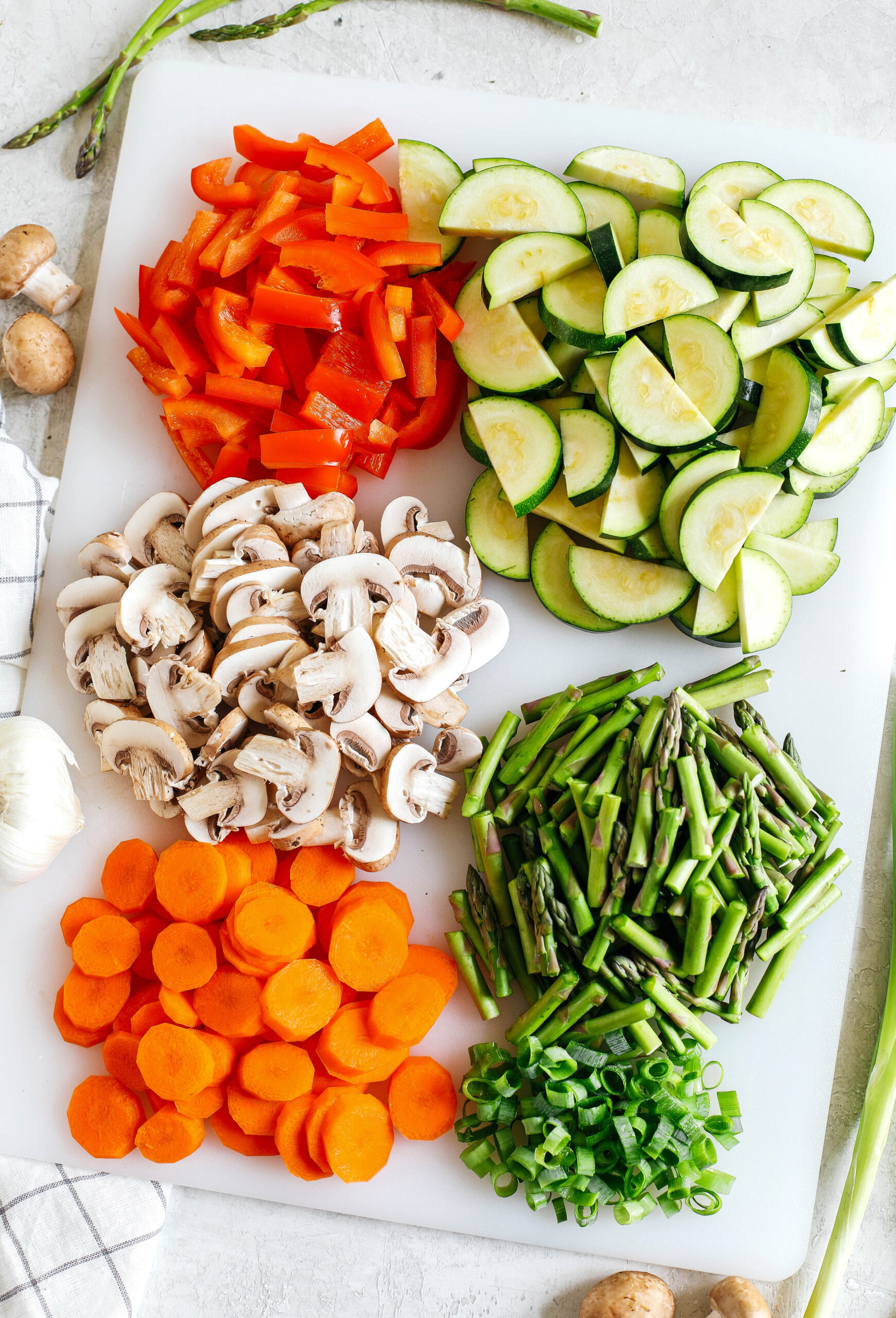
- Prep the vegetables. Wash, chop and slice all your vegetables before you begin cooking. Try to keep similar vegetables roughly the same size so they cook evenly.
- Heat the skillet. Heat olive oil in a large skillet or sauté pan over medium-high heat. Add the garlic and cook for about 30 seconds, stirring constantly, just until fragrant. Be careful not to let the garlic burn.
- Start with the firm vegetables. Add the carrots and asparagus first since they take longer to cook. Sauté for about 5 to 6 minutes, stirring occasionally.
- Add the softer vegetables. Add the zucchini, bell pepper, mushrooms, green onions and seasonings. Continue cooking for another 8 to 10 minutes, stirring occasionally, until the vegetables are tender but still have a little bite.
- Season and serve. Taste and adjust the salt, pepper or other seasonings as needed. Serve immediately while the vegetables are hot and crisp-tender.
Which Vegetables Should You Sauté First?
This is probably the most important trick when sautéing a mixture of vegetables: don’t add everything to the pan at the same time.
Harder vegetables take longer to cook, while softer vegetables can become mushy if they’re cooked too long.
A good rule of thumb is:
- Add first: carrots, broccoli, cauliflower, Brussels sprouts, green beans and asparagus.
- Add next: bell peppers, mushrooms, zucchini, yellow squash and onions.
- Add last: tomatoes, spinach, kale and other delicate leafy greens.
You can also cut firmer vegetables into smaller or thinner pieces to help everything finish cooking around the same time.
How Long Does it Take to Sauté Vegetables?
Cooking time depends on the vegetable and how large you cut the pieces, but most vegetables take somewhere between 5 and 15 minutes to sauté.
Firm vegetables like carrots, broccoli and cauliflower generally need more time, while zucchini, mushrooms and bell peppers cook much more quickly. Leafy greens may only need a few minutes.
Rather than relying only on the clock, look for vegetables that are tender when pierced with a fork but still have a little bite. You don’t want them soft or mushy.
How to Keep Sautéed Vegetables from Getting Soggy
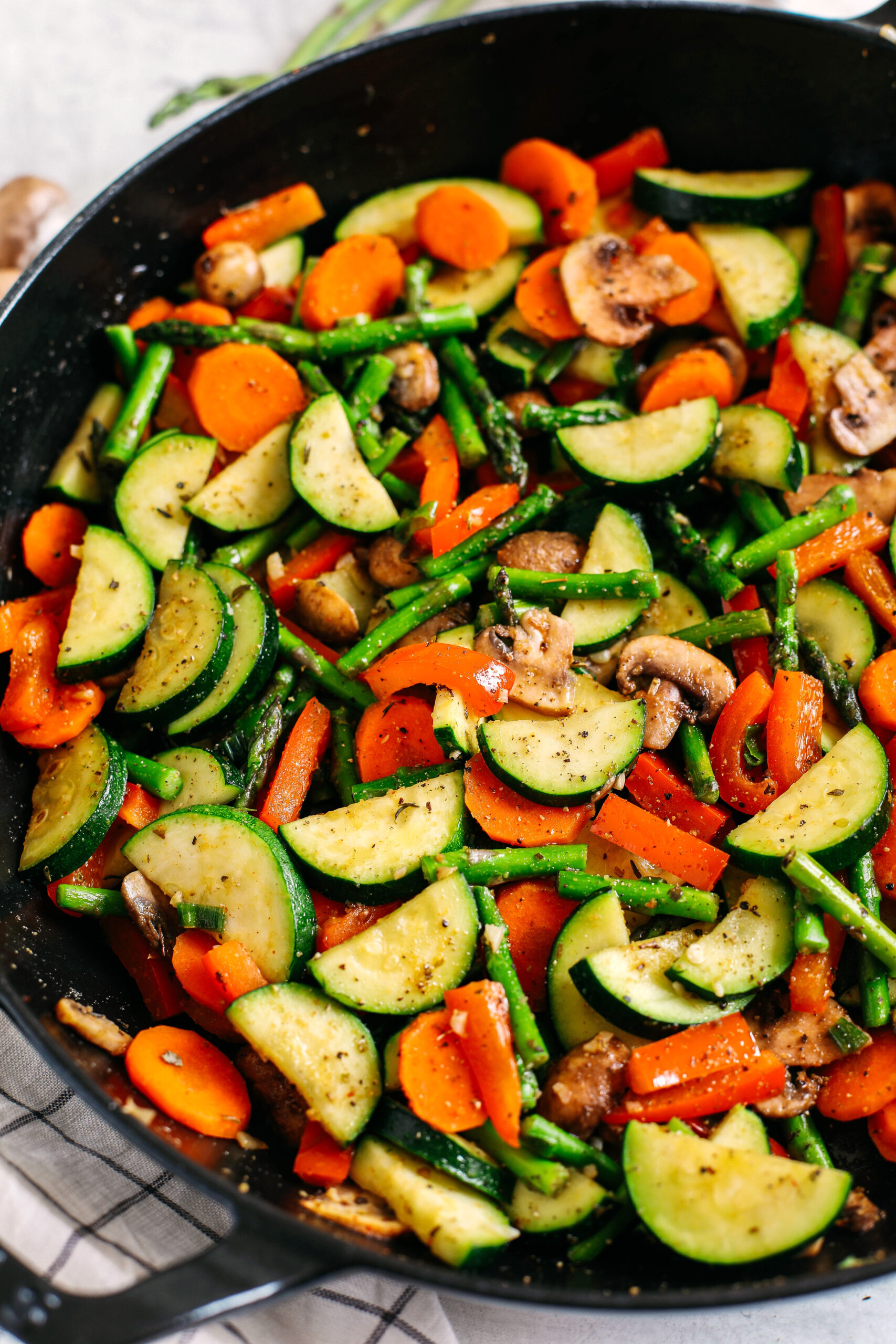
The biggest mistake when sautéing vegetables is letting them steam instead of brown. Here’s how to prevent that:
- Use a large skillet. Crowding the vegetables traps moisture and causes them to steam.
- Cook over medium-high heat. A properly heated skillet helps moisture evaporate quickly.
- Don’t stir constantly. Let the vegetables sit against the hot skillet for a little bit so they can develop those delicious browned edges.
- Don’t cover the skillet. A lid traps steam, which can make the vegetables soft.
- Add vegetables in stages. This prevents quick-cooking vegetables from becoming mushy while you wait for firmer vegetables to cook.
- Don’t overcook them. Remove the skillet from the heat when the vegetables are tender but still have a little bite.
Can I Sauté Frozen Vegetables?
Yes, you can sauté frozen vegetables, although I prefer fresh vegetables for the best crisp-tender texture.
Frozen vegetables release more water as they cook, so make sure your skillet is nice and hot and avoid overcrowding the pan. Don’t thaw the vegetables first, add them directly to the hot skillet from frozen.
Frozen vegetables will generally cook faster than fresh, so keep a close eye on them and remove them from the heat once they’re warmed through and tender.
Tips, Tricks and Substitutions
- Cut everything evenly – similar-sized pieces will cook at roughly the same rate.
- Use a large skillet – giving the vegetables room is one of the best ways to get those delicious browned edges.
- Keep the heat up – medium-high heat helps sauté the vegetables rather than steam them.
- Season to taste – try fresh herbs, lemon juice, Parmesan cheese, soy sauce or coconut aminos to change up the flavors.
- Add protein – chicken, shrimp or salmon can turn these vegetables into a complete meal.
- Add a finishing touch – a squeeze of fresh lemon juice or sprinkle of Parmesan just before serving is delicious.
What to Serve with Sautéed Vegetables
- Chicken – pair with my Easy Baked Chicken Parmesan or Ginger Maple Chicken for an easy, flavorful dinner.
- Salmon – serve alongside my Easy Air Fryer Salmon for a healthy meal that comes together quickly.
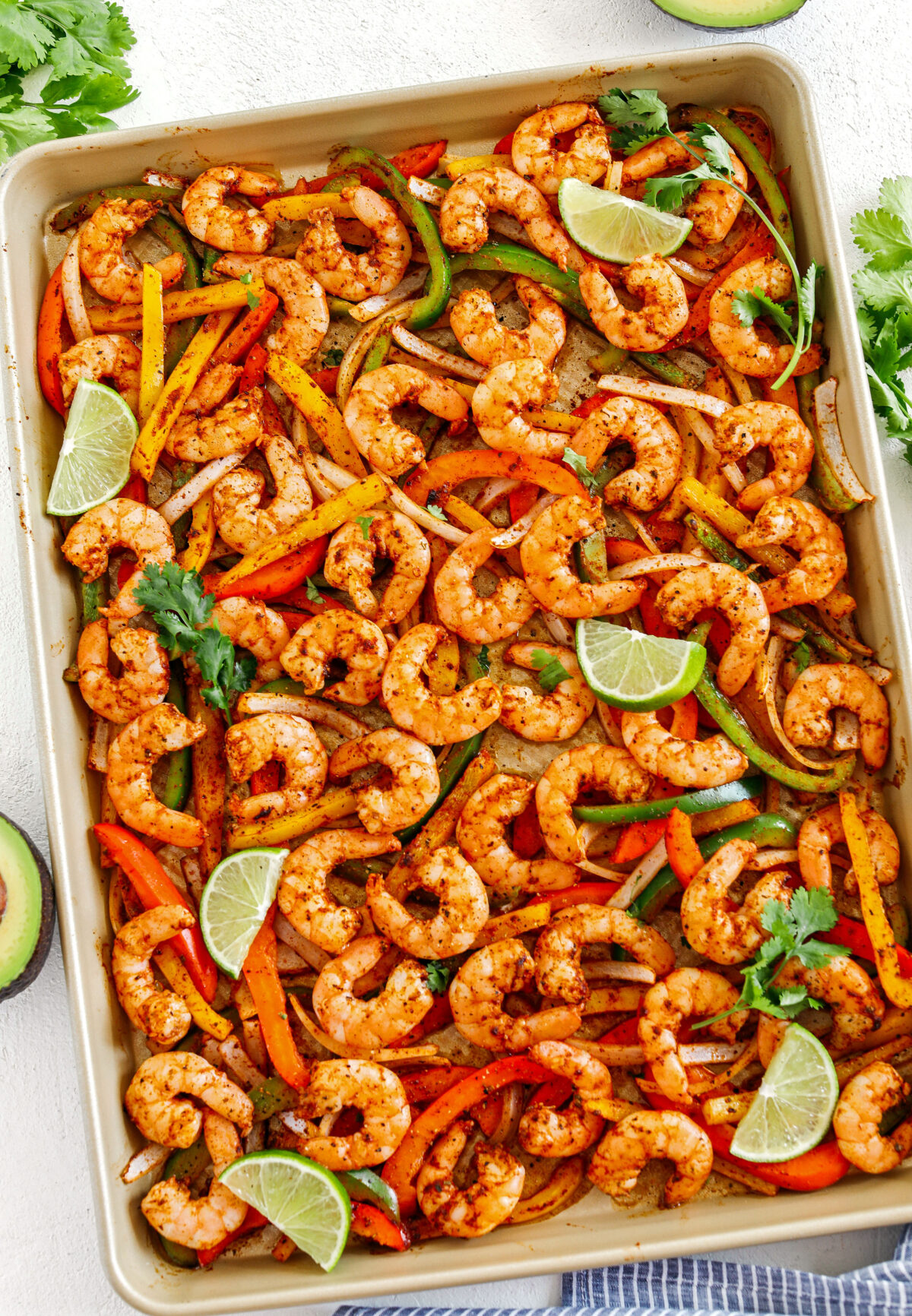
- Shrimp – these veggies would be delicious with my Honey Garlic Shrimp Stir Fry for an easy weeknight meal.
- Rice or quinoa – serve the vegetables over Instant Pot Brown Rice or quinoa with your favorite protein for a simple grain bowl.
- Meal prep bowls – add these veggies to meal prep containers with chicken or salmon, brown rice or quinoa and your favorite homemade dressing or sauce.
Frequently Asked Questions
Heat a small amount of oil in a large skillet over medium-high heat, add firmer vegetables first and softer vegetables later. Give the vegetables plenty of room in the pan and stir only occasionally so they have time to brown.
Medium-high heat works best for most vegetables. You want the skillet hot enough to brown the vegetables and quickly evaporate moisture without burning them.
I recommend leaving the skillet uncovered. Covering the pan traps steam, which can make the vegetables softer and prevent them from developing those delicious caramelized edges.
You can use a small amount of broth or water instead of oil, but the vegetables won’t brown or caramelize quite the same way. For this recipe, I prefer a little olive or avocado oil for the best flavor and texture.
Yes! These vegetables are great for meal prep. You can chop the vegetables ahead of time and refrigerate them until you’re ready to cook, or cook the entire recipe and reheat individual portions throughout the week.
Pin this now to find it later
Pin ItFollow on Instagram
More Healthy Vegetable Side Dishes
- Balsamic Roasted Brussels Sprouts
- Garlicky Green Beans with Caramelized Shallots
- Roasted Broccoli and Sweet Potatoes
- Roasted Squash, Cauliflower and Chickpeas
- Easy Mashed Cauliflower
Hope you all enjoy this simple way to make delicious vegetables! If you love this as much as we do, please leave me ⭐️⭐️⭐️⭐️⭐️ below and don’t forget to tag me on Instagram using the hashtag #eatyourselfskinny! I love seeing all your delicious recreations!
Simple Sautéed Vegetables
Ingredients
- 2 Tbsp olive oil
- 3 garlic cloves, minced
- 1 cup carrots, sliced
- 1 lb asparagus, ends trimmed and cut into 1-inch pieces
- 1 zucchini, sliced
- 1 red bell pepper, sliced
- 8 oz mushrooms, sliced
- 3 or 4 green onions, chopped
- 1 tsp kosher salt
- 1/2 tsp Italian seasoning
- 1/2 tsp onion powder
- 1/4 tsp paprika
- 1/4 tsp black pepper
- Pinch of red pepper flakes
Instructions
- Heat olive oil in a large skillet over medium-high heat. Add garlic and sauté for about 30 seconds, stirring constantly, until fragrant.
- Add carrots and asparagus and sauté for 5 to 6 minutes, stirring occasionally.
- Add zucchini, bell pepper, mushrooms, green onions and seasonings. Cook for another 8 to 10 minutes, stirring occasionally, until the vegetables are crisp-tender.
- Taste and adjust seasonings as needed. Serve immediately and enjoy!
Notes
Nutrition
Nutrition information is automatically calculated, so should only be used as an approximation.












Made this recipe for this week’s meal prep and will make it at least twice a month from now on, simple and delicious. I did a tablespoon of butter and was even better!
Hi,what is the proper accompaniment for cream soups
Hi
If I swap carrots for green beans how much should I use?
I would use about a cup 🙂
This is incredible. Very light and delicious. This is exactly what I needed. But I add a little piece of meat to it and now it is a perfect lunch for the lunch break at coworking Göteborg.
It was nearing dinnertime and I had no idea what I wanted. I only had to cook for me so it should have been an easy decision but it wasn’t. I wanted something healthy and filling but simple and not too time consuming. I started surfing for ideas and soon the picture of this big, beautiful pan of vegetables flew by. I scrambled back looking for it and landed on the best, healthiest, most beautiful meal, sauteed vegetables! Lot’s of colorful, beautiful veggies with some just right spices. I had some of them but not all so I headed to the grocery store and came home with everything I needed. This recipe fit the bill and was easy and simple and what a great dish! I made enough to for 2 or 3 days of a healthy, tasty dinner with a WOW factor. This recipe will also serve me well as the vegetables pile up this summer! Thank you for sharing!
I have made this so often. This is such a big hit in my home. Even those that do not like certain veggies eat it!
Why do you show geen onion but don’t list it ?
Oops my mistake! I definitely add green onions to this, I’ll update the recipe card 🙂 Sorry about that!